
Stroke Team celebrates national award nomination
A patient-led approach to improving stroke services has earned the Stroke Team at University Hosptals Dorset a national award nomination.
The team has been shortlisted in the ‘Emerging Good Practice’ category at the Picker Experience Network (PEN) Awards, recognising its commitment to working in partnership with patients and the public to enhance stroke care.
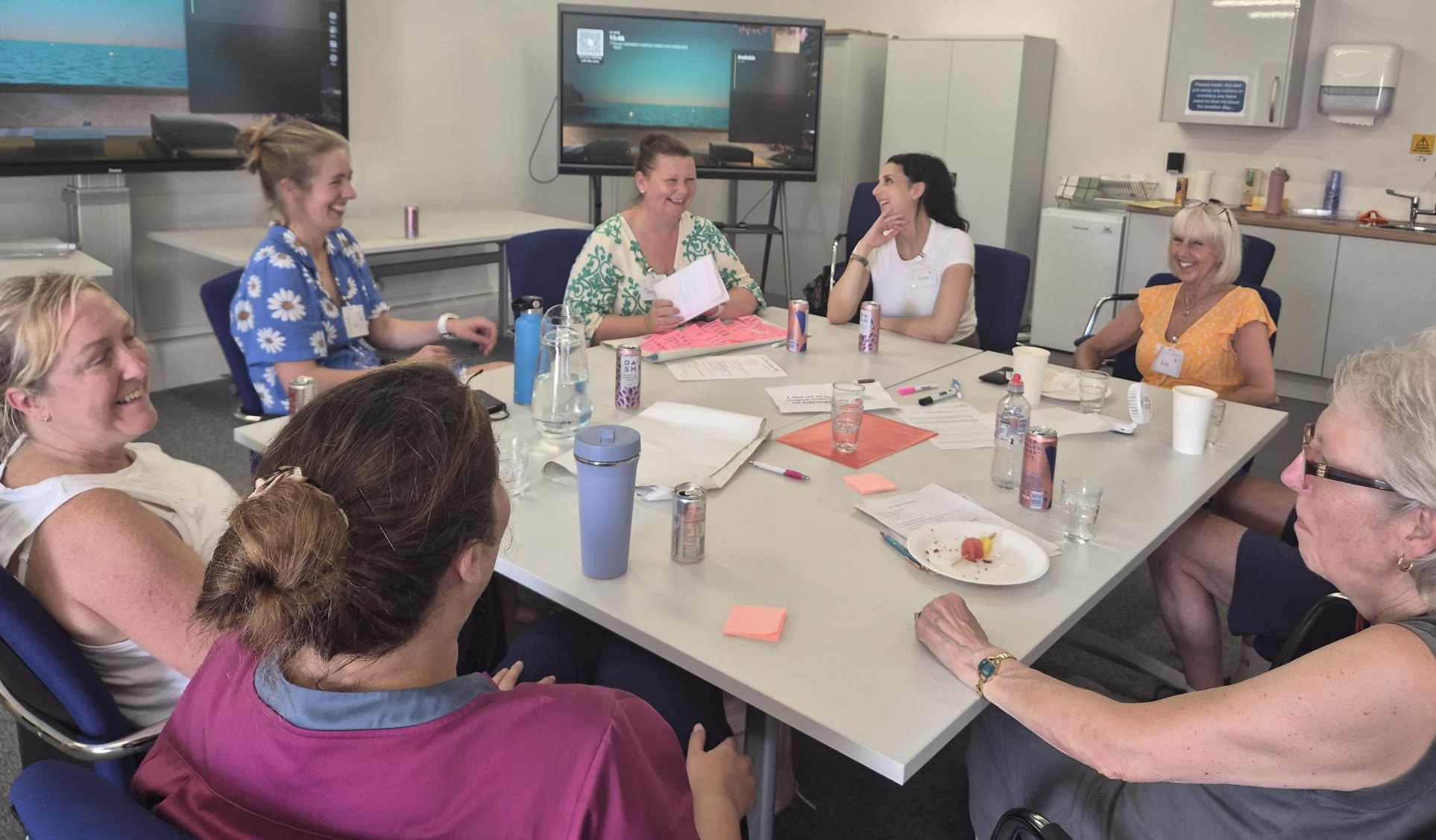
As part of the project, the team recently hosted an experience-based co-design workshop at Christchurch Hospital, bringing together more than 20 people who had received thrombolysis, alongside others with lived experience of stroke care and treatment.
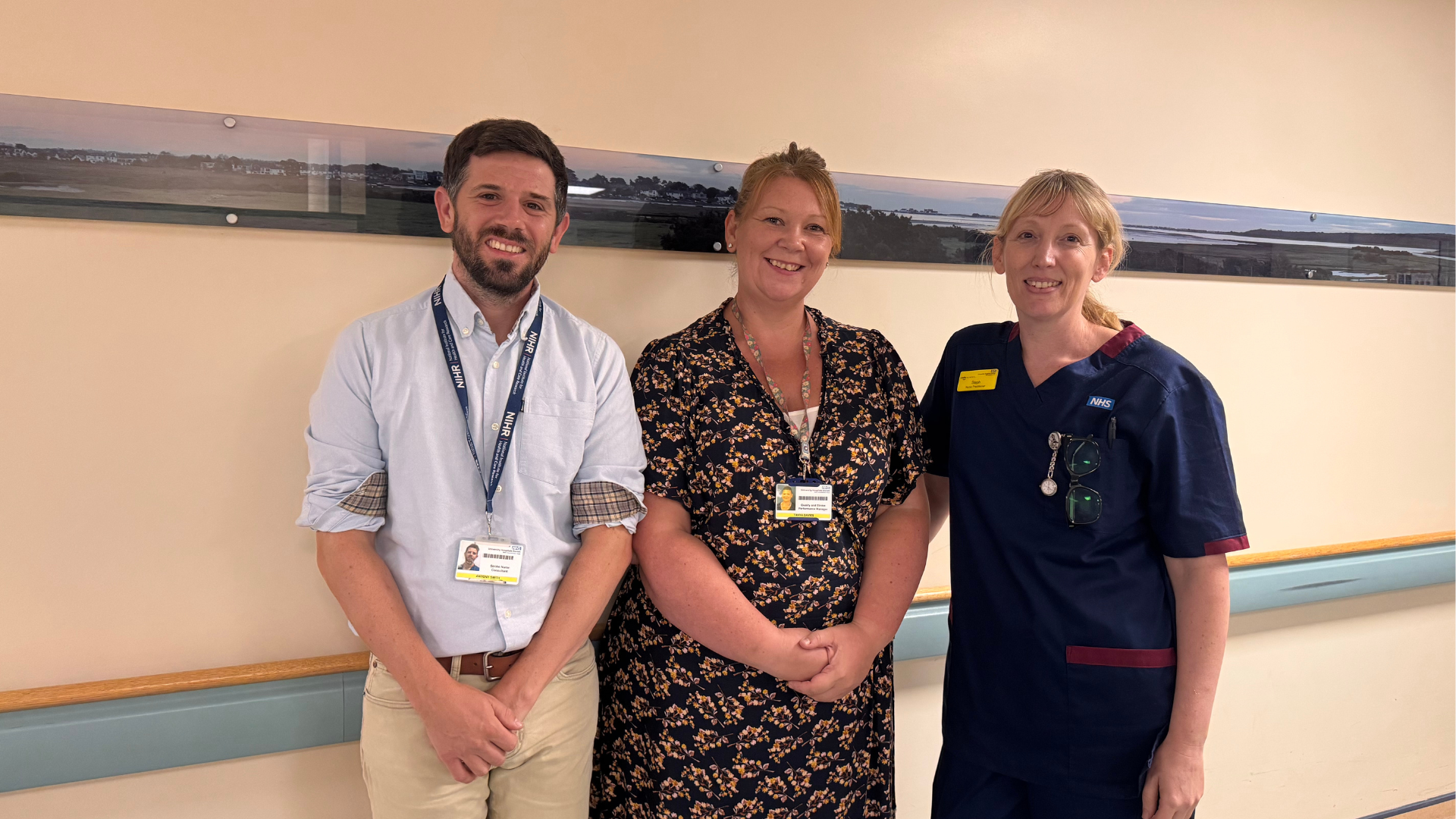
L-R: Antony Smith-Stroke Nurse Consultant | Tanya Davies-Stroke Quality and Performance Manager | Stephanie Heath-Stroke Nurse
Stephanie Heath, Stroke Nurse, said: "The workshop was a huge success. It gave us the opportunity to listen to our patients and recognise that they are the experts in their own experiences, becoming true partners in helping us design higher-quality services that deliver what really matters to patients.
"It also gave our team a chance to have meaningful conversations with people about their experiences of stroke services away from clinic and ward environments. Staff really valued these unique insights into aspects of stroke care that they may not have considered before."
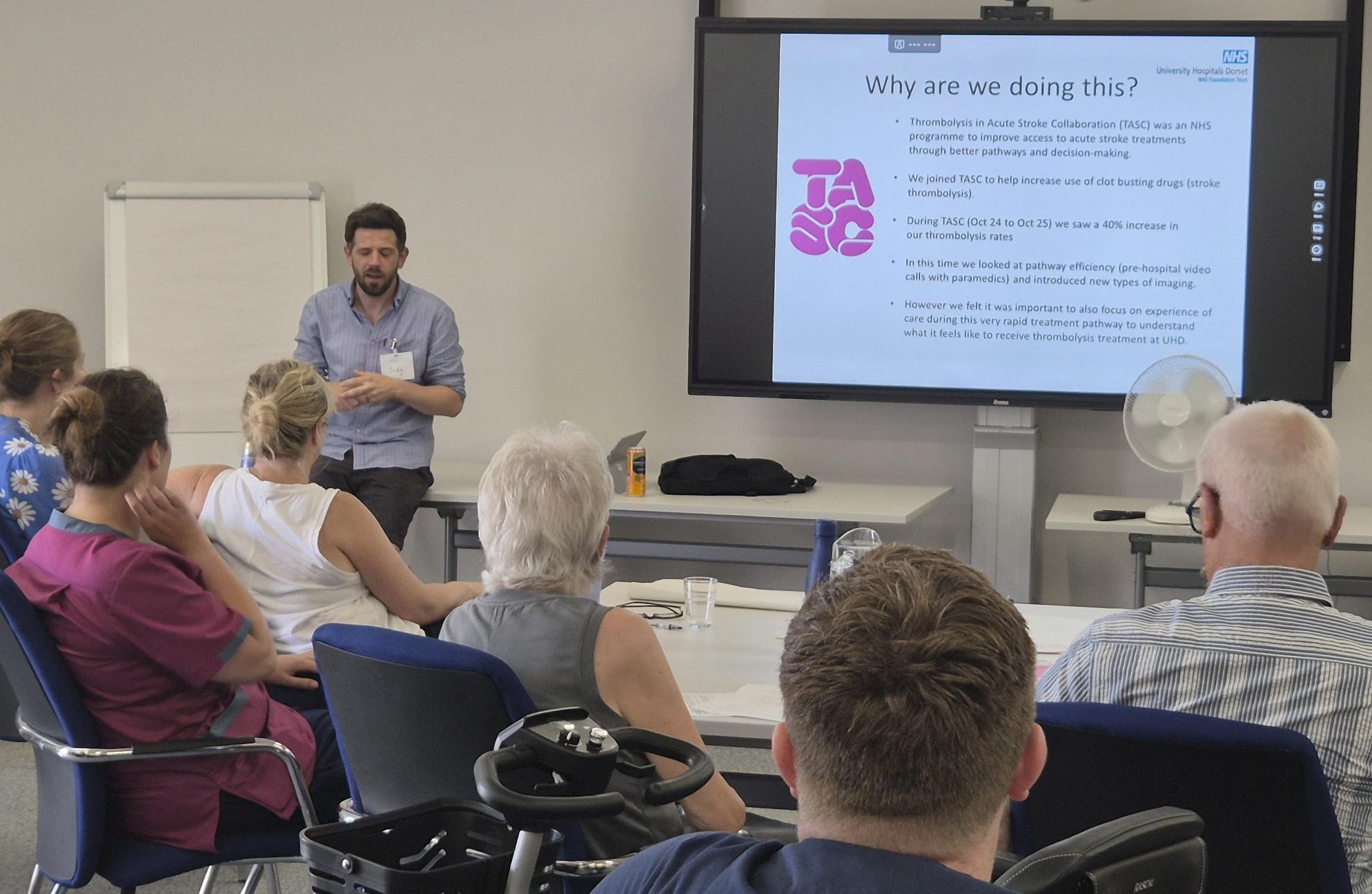
The work forms part of a national programme aimed at improving access to acute stroke treatments and enhancing patient pathways, including the use of thrombolysis, an emergency medicine that can help restore blood flow to the brain following certain types of stroke.
The team hopes the project will continue to strengthen stroke services across Dorset while ensuring patients remain at the heart of future improvements.
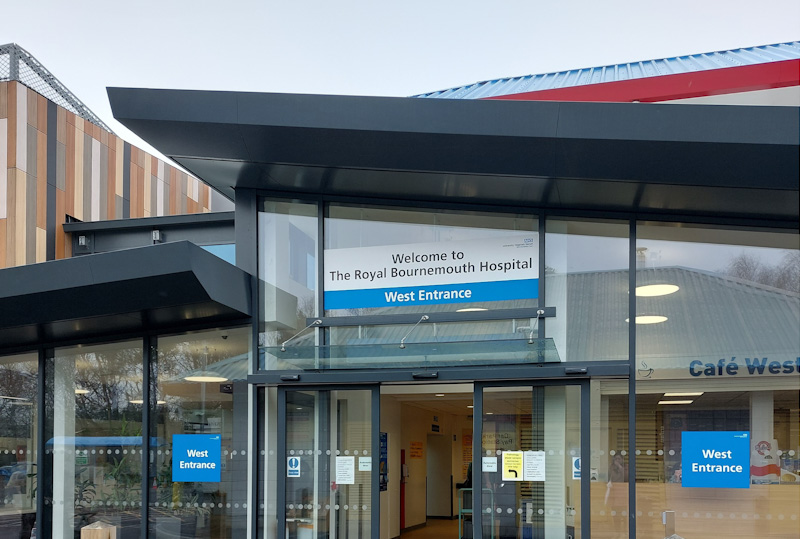
Antony Smith, Stroke Nurse Consultant, said: "Bringing stroke services together at the Royal Bournemouth Hospital has created a single specialist team and a more consistent pathway for patients requiring emergency stroke treatment. This has enabled us to focus quality improvement work on one service and apply learning more consistently.
"It also means that feedback from patients through initiatives such as this co-design event can be translated into improvements across the entire hyperacute stroke pathway."
Antony added: "The biggest message we want people to remember is not just recognising the symptoms of a stroke, but acting immediately. Even one FAST symptom is enough to call 999.
"When it comes to stroke, every minute matters because rapid treatment can dramatically improve outcomes and reduce disability."