

Speech and Language Therapy
Speech and Language Therapists work with people with speech and swallowing difficulties.
Speech and Language Therapists are an integral part of the Stroke Unit multi disciplinary team at Bournemouth Hospital. They usually wear a white tunic with yellow or pink trim and black trousers. They work across the Stroke pathway including the Hyperacute service, rehabilitation pathways and into the Early Supported Discharge team or Community Rehab teams, which can be involved when patients first go home.
Swallowing
On admission to the stroke unit, our specialist nurses will complete a water swallow screen. If this identifies you at risk of swallowing difficulties then you will be automatically referred to the speech and language therapists. They will do a more in depth assessment and advise you of any strategies that can help your swallow. They may recommend you modify your diet to make it easier to chew or thicken your drinks. This will be discussed with you during the assessment.
Some patients may require an instrumental assessment of their swallow (videofluoroscopy). This is a moving xray where you will be asked to swallow barium and images will be taken of your swallow.
If your swallow is not safe, the medical team may recommend that you have a temporary feeding tube (NG tube). The medical team, dietitian and speech therapists will regularly review to work with you and your family to return to oral intake.
Communication
People with stroke can experience difficulties communicating. This can include understanding what someone is saying and finding the right words. It can also affect reading and writing. If you have communication difficulties when admitted then you will be seen by a Speech and Language Therapist for assessment and advice. If further therapy is needed then your SLT will work with you to decide therapy goals and approaches. This may include 1:1 therapy, providing friends and family with advice and/or group work.
We run a communication group every week. Education around strokes and communication difficulties is provided. It allows people with communication difficulties to build their confidence and practice their strategies in a functional and enjoyable setting.
Our PACT group (People with Aphasia Communicating Together) runs once a month. This is an opportunity for people with aphasia in hospital and people who are now at home to meet and share their experiences. This is facilitated by the SLT team and volunteers who have previously had strokes.
Physiotherapy
Physiotherapists are an integral part of the Stroke Unit multi disciplinary team at Bournemouth Hospital. They usually wear a white tunic with blue trim and blue trousers. They work across the Stroke pathway including the Hyperacute service, rehabilitation pathways and into the Early Supported Discharge team or Community Rehab teams, which can be involved when patients first go home.
Physiotherapy helps you to restore movement that has been reduced or lost as a result of the Stroke. After a Stroke everyone has a full therapy assessment to establish your rehabilitation needs. The degree of impairment after a stroke depends on the severity and location within the brain.
Physiotherapy can identify impairments and establish some goals with you to help prevent secondary complications and return to daily tasks.
Your physiotherapist can recommend exercises and tasks to aid your recovery. We encourage self-management to optimise your recovery; this can be supported by family, friends and specialist equipment. You will be considered for all specialist equipment that is appropriate to both your stroke impairments and pre-existing conditions.
We have access to a therapy gym, therapy kitchen, specialist seating, transfer aids, electrical stimulation and mirror box therapy.
Through charitable funds we also have The Walkerbot, Robotic Tilt Table and tablets to enable access to both entertainment and rehabilitation apps.
Stroke is a life-changing event and we hope that physiotherapy can assist in preventing secondary complications such as pain and loss of joint range of movement and help to restore any possible movement.
Stroke Outreach Service
New content coming soon
Occupational Therapy
Occupational Therapists (OTs) are an integral part of the Stroke Unit multi disciplinary team at Bournemouth Hospital. They usually wear a white tunic with a green trim and green trousers. They work across the Stroke pathway including the Hyperacute service, rehabilitation pathways and into the Early Supported Discharge team or Community Rehab teams, which can be involved when patients first go home.
Occupational Therapists play an important role in assessing a patient's functional abilities in carrying out everyday living tasks after having a Stroke. Their intervention usually starts quickly after admission and includes evaluating the patient's ability via performance, for example; feeding, getting out of bed, toileting, getting washed and making a cup of tea.
Patients can range from being well post stroke to being very unwell, therefore the choice of tasks are appropriate to that situation and the patient's usual lifestyle. Assessments by an Occupational Therapist can provide useful guidelines to others on possible risks and support needs of the patient on the ward, as well as management guidelines to support good care e.g. how long they can sit out for and in what type of supportive seating.
Assessments help shape an understanding of how the stroke has affected each patient and where they may be experiencing new difficulties, as this can vary widely. Stroke related impairments can include cognition, mood, fatigue, vision, behaviour and impact their social relationships therefore all these are considered by an Occupational Therapist as well as their physical recovery.
We use our assessments to inform a rehabilitation plan aimed at regaining independence and managing daily living activities, where appropriate. Occupational Therapy rehabilitation includes lots of practice of daily living tasks as well as group work. This is with the aim of recovering to a sufficient level to be able to move out of hospital to ideally return home safely and continue further recovery at home with community services. Sometimes patients are unable to recover sufficiently to return to their previous level of independence and Occupational Therapists will plan a discharge which provides support for them to manage at home. This can include equipment / adaptations in the home environment, care and therapy.
We would always aim to discharge a patient back to their home from hospital however sometimes patients do not recover sufficiently to be able to safely manage at home and Occupational Therapists will guide decision-making about what happens next, with an understanding of the available options and the processes involved. This will be done together with the patient, their family and other members of the multi-disciplinary team.
The Stroke Unit
The Stroke Unit is committed to the provision of high quality specialist stroke care after a stroke or transient ischaemic attack (TIA). The Stroke unit can be found on the East wing of the ground floor.
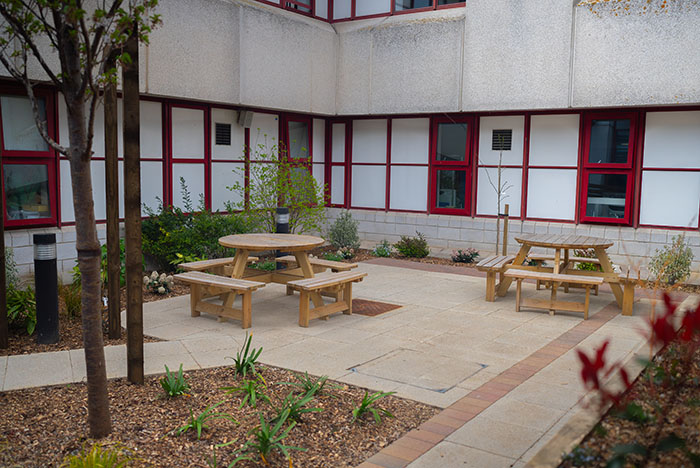
On admission to the Stroke Unit, patients may be admitted to our Hyper Acute bay depending on their clinical need for specialist monitoring and treatment. Patients will then be stepped down into an appropriate single sex bay for the remainder of their inpatient stay.
Stroke care is delivered on the unit by a closely working multi-disciplinary team who aim to provide skilled and compassionate treatment. We involve patients and their relatives in care decisions as much as possible as we recognise this can be emotional and challenging time.
There are three stroke consultants on the unit and you may be seen by more than one during your stay. The medical team are happy to discuss your/ relatives care and update you with the medical plan. Many of our patients will have a care review meeting during their stay so professionals involved with patients can feedback progress and plans.
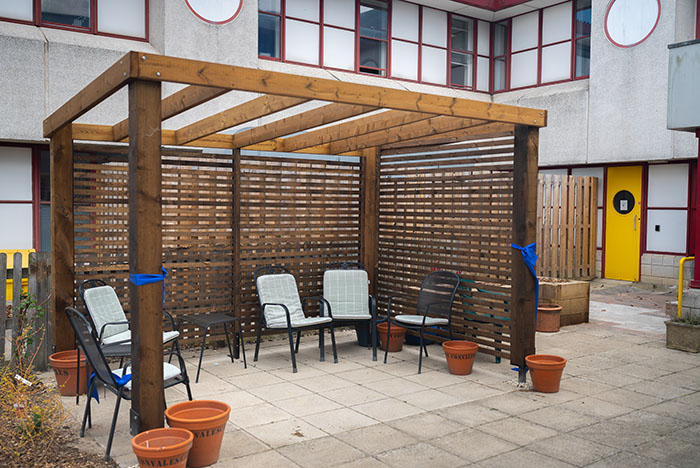
Our visiting hours are 11am – 8pm.
We do try and have a protected meal time for patients between 12-1pm and 5-6pm with restricted visiting.
If you cannot visit during visiting times please speak to the nurse in charge and we will aim to accommodate you.
If you are not happy with the care we are providing please speak to the nurse in charge so we can address your concerns and improve your experience. Your feedback is important to us to improve the experience of others.
You can contact the Stroke Unit by telephone on 0300 019 4001, 0300 019 4002, 0300 019 4006.