
Antibiotics and MenB vaccination to be offered to young people in Dorset - Update 20 April 2026
UKHSA is continuing to work with Dorset Council, NHS and local partners to support the roll out of antibiotics and vaccination to young people in Weymouth, Dorset after three cases of MenB were confirmed in the area. As of 8pm on 19 April, more than 1,800 pupils at Budmouth Academy and Wey Valley Academy have been given antibiotics, out of a total of 2,500 students offered them at these schools.
All three cases have now been discharged from hospital and there are no further suspected or confirmed cases to date.
In total, 6,500 young people in years 7-13 (or equivalent) across Weymouth, Portland and Chickerell will be offered both antibiotics and vaccination as a precautionary measure. From today, further rollout continues with students attending All Saints Academy being offered antibiotics as a precaution.
For anyone eligible but not in full-time education in Weymouth, Portland and Chickerell, they can access antibiotics from Tuesday afternoon at All Saints Academy.
Dr Beth Smout, UKHSA Deputy Director, said:
“We are really pleased to see such high uptake of the antibiotic offer over the weekend. Antibiotics are the best course of action if there is a chance you have been exposed to meningococcal bacteria, with MenB vaccination offering longer term protection against becoming seriously ill.
“Thanks to the swift action from Dorset Council, local partners and NHS staff, over 6500 young people in the area will be able to access antibiotics, with vaccination to follow in the coming weeks.
“Thankfully we have seen no further cases of meningitis, but it’s still important to recognise the signs and symptoms. Symptoms can include a fever, headache, rapid breathing, drowsiness, shivering, vomiting and cold hands and feet. Septicaemia can also cause a characteristic rash that does not fade when pressed against a glass. If the disease is suspected, you should seek immediate medical attention as the disease can progress rapidly.”
Dawn Dawson, Chief Nursing Officer of Dorset HealthCare and Dorset County Hospital, said:
"I’d like to thank all of the families, NHS colleagues and all partners who have worked so hard to help us to deliver the antibiotics to the children and young people of Weymouth at such speed over the weekend.
“It has been an amazing multi-agency response, and we continue to work together to make sure that antibiotics and vaccinations reach the remainder of the children and young people in the eligible population this week."
Anyone attending Atlantic Academy, Kingston Maurward Academy and Coastland Academy will be invited for antibiotics and vaccination this week.
Anyone who has not been able to access antibiotics and vaccination in schools, including those who are home educated, not in education or training and those who reside in Weymouth but attend a school outside of the area, can access antibiotics and vaccination at the following times:
-
At All Saints Academy between 4-8pm on Tuesday 21 to Friday 24 April
Antibiotics and MenB vaccination to be offered to young people in areas of Dorset following 3 cases of invasive meningococcal disease
The UK Health Security Agency (UKHSA) is working with Dorset Council, the NHS and local partners following three confirmed cases of meningococcal infection (meningitis) in young people in Weymouth, Dorset.
The cases were confirmed between 20 March and 15 April. All have received treatment and are recovering well. Close contacts of the cases have already been offered antibiotics as a precaution.
Two of the cases attend Budmouth Academy, and the other attends Wey Valley Academy. Further information about the signs and symptoms of meningitis has been shared with students and parents of both schools.
Around 300 to 400 cases of meningococcal disease are diagnosed in England every year. These three cases have been confirmed as Meningitis B (MenB) and are the same sub-strain type, but a different sub-strain to the one detected recently in Kent.
The two cases who attend Budmouth Academy are contacts of each other, but currently no confirmed epidemiological link has been made between these cases and the third individual who attends Wey Valley. This may mean that this strain of MenB bacteria is transmitting more widely among young people in Weymouth.
Due to this, and as an additional precautionary measure, antibiotics and MenB vaccination will now be offered to young people currently in school years 7 to 13 across the Weymouth, Portland and Chickerell areas of Dorset.
Dr Beth Smout, UKHSA Deputy Director said: “We are working closely with partners to follow up and offer precautionary antibiotics to close contacts of the cases. However, meningococcal disease does not spread easily, and outbreaks like we have seen recently in Kent are rare. These cases are not linked to the Kent outbreak, and it is important to be aware that this outbreak is not on the same scale as we saw in Kent in terms of speed of transmission or severity.
“However, it is possible that we will see further cases linked to these latest cases in Weymouth and we understand that there will be concern among students, staff, parents and the local community as we widen our offer of antibiotics and vaccination. I’d like to stress that this is an additional precaution, and that we’re following national guidelines to reduce the risk of the infection spreading. School pupils and staff should attend school as normal if they remain well.”
UKHSA is now recommending a single dose of antibiotics and a meningitis B vaccine be offered to young people who live or go to school in the Weymouth area, as follows:
- Anyone who is a resident in Weymouth or Portland or Chickerell and is in current school years 7 to 13 (or equivalent), or anyone not in full time education who would be in one of these year groups
OR
- Anyone who attends an educational setting in the Weymouth, Portland or Chickerell area and is in current school years 7 to 13 (or equivalent).
This will be offered in stages starting with Budmouth Academy and Wey Valley schools, as the cases attend these settings. Pupils that attend other schools and other eligible children in Weymouth who do not attend school will be invited after the weekend.
Young people under 16 should be accompanied by a parent or guardian who is able to provide consent at the time.
More information on the vaccination schedule will be provided in due course.
Dr Smout added: “Meningococcal disease can progress rapidly, so it’s essential that everyone is alert to the signs and symptoms of meningococcal meningitis and septicaemia, which can include a fever, headache, rapid breathing, drowsiness, shivering, vomiting and cold hands and feet. Septicaemia can also cause a characteristic rash that does not fade when pressed against a glass. If the disease is suspected, you should seek immediate medical attention as the disease can progress rapidly.
“It’s also important for teenagers to ensure they take up the MenACWY vaccine routinely offered by the NHS – but also to be aware that this vaccine does not protect against Men B, which is why knowing the symptoms and seeking early treatment is so important.
“Young people in school years 7 to 13 in Weymouth are strongly encouraged to take up the offer of antibiotics and MenB vaccination and we are grateful to all those involved in our investigations so far for assisting us.”
UKHSA and Dorset Council have issued advice to staff, parents and carers at all educational settings in the area.
Anyone who becomes unwell with symptoms of meningitis and septicaemia should seek medical help urgently at the closest Accident and Emergency Department or by dialling 999. Early treatment can be lifesaving. If you're not sure if your symptoms are serious, use NHS 111 online or call 111 for further advice.
Experts from University Hospitals Dorset (UHD), Bournemouth University (BU) and South Western Ambulance Service NHS Foundation Trust (SWASFT), are holding a health talk focusing on what happens to a patient in an emergency – ‘From 999 call to the Emergency Department - what happens on a patients’ emergency care journey?’
Dr Aishah Iftikhar, Emergency Care Consultant at UHD, Dr Ursula Rolfe, Associate Professor in Paramedic Sciences, at BU and David Sale, Clinical Team Manager, at SWASFT, will explain what medical care paramedics can give in the back of an ambulance and the extensive training they undergo. They will also explain why it is so important for a patient to go to a hospital with the most appropriate medical care straight away, which can sometimes mean going past a different hospital.
The talk will take place on Monday 20 April, at 6pm in the Wolfson Lecture Theatre, BU Bournemouth Gateway Building, Lansdowne, BH8 8GP. Presenters will answer questions from the audience at the end of their talks.
Dr Aishah Iftikhar, Emergency Care Consultant at UHD, said: “When a patient experiences a health emergency outside of a hospital setting, lifesaving treatment is often started before they come through the doors of an Emergency Department.
“In our talk, we’ll explain how a patient is cared for and why saving a patient’s life, especially when the start of their emergency care journey starts outside of the hospital, is a real team effort.”
The free event is open to everyone and booking a place is recommended via Eventbrite. The health talk will be recorded and added to UHD’s health talk library after the event.
For information about the plans and all the changes happening cross University Hospital Dorset, please visit uhd.nhs.uk/future
You are welcome to download and print the poster below:

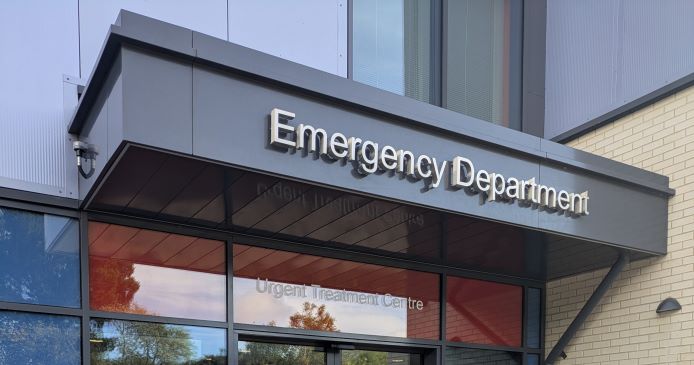
Important update for people attending our Emergency Department
Those registered with a GP in Dorset who attend the Emergency Departments (ED) in the Royal Bournemouth Hospital or Poole Hospital may now be asked to contact their own GP surgery or directed to a local pharmacy if their condition is not serious enough to require emergency care in hospital.
This change helps to ensure patients get the right care, in the right place, at the right time.
What does this mean for patients?
If you attend our ED with a minor illness, you may be:
- advised to contact your own GP - this is usually via online GP platforms or the NHS app
- directed to a community pharmacy for expert advice and treatment
- signposted to another appropriate local health service
If you need assistance completing the online forms our teams will be able to help. Anyone who needs urgent or emergency hospital care will still be seen in ED or at the Urgent Treatment Centre (UTC) as soon as possible. Our UTC operates a booked appointment system, so if this is the best place for your care, you may be asked to return at a later time to be seen.
Why is this happening?
ED services are under extreme pressure. Many people attend with conditions that can be safely and more quickly treated by those in Primary Care, pharmacists or other community services.
By using a NHS digital triage tool, we can safely prioritise, redirect and schedule patients based on clinical need, with support from our clinical colleagues where required. This will help us ensure we:
- keep our Emergency Departments clear for people with life-threatening emergencies
- improve wait to be seen times for people with life-threatening emergencies
- help all patients get seen faster with treatment in the most appropriate setting
- improve overall patient experience and safety
This approach also helps prevent overcrowding in ED, which can impact care for the sickest patients.
What types of conditions may be redirected?
Examples include:
- minor infections or injuries that don’t need hospital treatment
- medication queries or prescription related issues
- flare-ups of stable long-term conditions
- general health concerns that can be managed by primary care colleagues
Clear safety checks are in place, and patients will immediately be sent to ED if there are any concerns.
When should you still use ED?
You should always attend ED or call 999 for emergencies such as:
- chest pain
- signs of stroke
- severe breathing difficulties
- serious injury or bleeding
- loss of consciousness
For non-urgent health issues, people are encouraged to:
- contact their GP practice
- visit a community pharmacy
- use NHS 111 for advice and guidance
Dr Peter Wilson, Chief Medical Officer, said: “This year we have seen record numbers of people attending our Emergency Departments and patients often waiting a long time to be seen. While our teams are working incredibly hard to support our patients, we need to focus on those who need urgent help the most.
“By having this additional support at the front door of the Emergency Department, we hope more people will get the care they need more quickly, allowing our teams to concentrate on providing life-saving care.”
During times of industrial action, our priority is to provide safe care. Please help us by choosing the right services for your needs.
Key information for hospital appointments and patients
- At times, we may have to postpone some appointments during industrial action. We will let you know directly if your appointment is cancelled. Please assume it is going ahead unless you are contacted directly.
- No-one should put off seeking urgent or emergency care during the strikes and people with serious, life-threatening conditions will continue to be seen in our emergency departments.
- Use NHS 111 online or by phone for other urgent care needs. If you are contacting 111, please give as much information as you can, as that will help you get the right support and advice.
- For non-urgent care services please contact your GP practice to make an appointment.
Mental health support
If you need mental health support call Connection on 0800 652 0190. The Connection service is available 24 hours a day, seven days a week.
Visit your local pharmacy
Pharmacies can help with allergies, constipation, headaches, earaches and many other ailments.
Find a pharmacy near you.
Patient discharge
Staying in hospital for longer than necessary can have a negative impact on how well patients recover. Most patients will continue to recover at home once they leave hospital. In fact, many patients need to leave hospital to be able to complete their recovery fully.
Help us get patients who are ready for discharge home so our hospital beds are available for people who need them most urgently. Please speak to the ward team if you need more information and respond quickly to any calls from us about your relative leaving hospital.