


C3
Welcome to C3. We are an orthopaedic trauma admissions ward providing care for adult patients as part of a dedicated trauma pathway
- Poole Hospital
- View map
Visiting times
Please see Trust Visitors Charter here
We have set visiting times to allow us to provide care and for our patients to rest.
Please do not visit if you have had any diarrhoea or sickness in the last 72 hours or have cough/cold symptoms.
Mealtimes
12-2pm and 5:30-6:30pm
Lunch is a protected mealtime when visiting is not allowed. However, you may visit if your relative needs assistance at mealtimes.
Personal belongings
We advise personal belongings of high value or large sums of money are not brought into the ward.
How tow to find us
C3 is situated on level 3 in the PINK ZONE. You can View our hospital maps here
Sandbanks Ward
Sandbanks Ward is one of two in-patient wards in the Dorset Cancer Centre. Sandbanks specialises in the care of patients receiving treatment for gynaecological cancer.
- Poole Hospital
- View map
Find out more about Sandbanks Ward by watching a short video here.
Useful ward information:
- Day room, TV and DVD, garden, patient and relative kitchen area with microwave.
- Relatives’ room for overnight stay
- Garden
- Mobile phone use is generally acceptable, with some restrictions.
- Flowers are not permitted.
Ward Matron: Andrea Moxham
Contact telephone number: 0300 019 2390
Visiting: Please see Trust Visitors Charter here
Visiting outside of these times may be possible in special circumstances and at the discretion of nursing staff.
Please do not visit if you have had any diarrhoea or sickness in the last 72 hours, or have cough/cold symptoms.
How to find us: Sandbanks Ward is situated on the lower ground floor level of the Dorset Cancer Centre, and is accessed via entrance 8.
Portland Ward: Neurological Assessment and Specialist Rehabilitation Unit
Portland is a medical ward providing care to patients with acquired brain injury, anoxic brain damage, neurology, dermatology and rheumatology patients. The acquired brain injuries rehabilitation team is also available on Portland ward.
- Poole Hospital
- View map
Portland Ward is a medical ward with nine Neurological and five Acquired Brain Injury (ABI) beds. Occasionally we may have rheumatology patients. The ward is divided into two teams: Yellow Team and Blue Team.
Portland Ward has a large day room and a garden for patients and relatives to use. On arrival you will be allocated a bed in either a bay or a side room. However, it may be necessary to move beds according to the varying needs of patient care, infection control or video telemetry.
The unit has gained accreditation as a Practice Development Unit (PDU).
Contact details
Ward leader 0300 019 2537 / 0300 019 8032
ABI Specialist Nurse 0300 019 8957 / 0300 019 8032
Ward Clerks 03000198957
Nurse Station 0300 019 8032
Acquired Brain Injury (ABI) rehabilitation service at Poole Hospital
A brain injury is a common health problem. It can happen to anyone. The injury can range from a bump on the head, which may leave minimal longterm damage, to a major injury, which can change all areas of a person’s life.
People with a severe brain injury may experience a range of difficulties and disabilities. This will affect all members of that person’s family. Everyone’s brain injury and recovery is different; therefore, the rehabilitation process and outcomes will vary considerably from person to person.
The inpatient Acquired Brain Injury Rehabilitation Service at University Hospitals Dorset rehabilitates people with severe brain injuries. The team consists of doctors, nurses, physiotherapists, occupational therapists, speech and language therapists, and psychologists. The whole team ensures that a person’s physical, emotional and social rehabilitation needs are met.
When you are admitted to the inpatient service you will be assessed by the whole team and allocated a keyworker. You will be provided with a rehabilitation programme guided by your own, personal goals. Within the first four weeks of your rehabilitation, a review meeting will be arranged.
Keyworker
To ensure that everyone is supported during your inpatient stay, a keyworker is allocated at the beginning of your rehabilitation programme. The keyworker provides a single point of contact for you and your family members, and communicates guidance regarding your rehabilitation.
Goal setting
To help monitor your progress during your rehabilitation, guidance is provided to help set long and short-term goals. This will help therapists to know what is important to you and what you would like to achieve. Long-term goals are set for your full length of stay. Short-term goals are set for a six week period. This is usually from one review meeting to the next review meeting.
If you are rapidly improving you may be admitted for an assessment period only.
Review meetings
Review meetings are held on the ward, usually every six weeks, during your rehabilitation stay at Poole. They are co-ordinated by the keyworker. Before each meeting, the keyworker will contact you and your family to see if there are any questions or concerns about your treatment programme.
Where possible, a therapist from each discipline and a doctor attend each meeting. Every member of the team provides a summary of your progress and discusses future goals and treatment programmes. At the end of the review meeting a date is set for the next review meeting, if required.
Following the review meeting, the keyworker provides a written summary of the meeting for you and your family, as well as a copy of your goals.
Observation of therapy sessions
When the therapists have completed their assessments with you, there may be opportunities for family members to observe your therapy sessions. Please discuss this with your keyworker and they can co-ordinate this with the therapists involved.
Please be aware that staff are unable to provide information that is confidential in nature over the telephone. We ask that you do not telephone the ward (unless urgent) between 7 am and 11 am for routine enquiries as we are undertaking management of patient care. We are happy to take calls after this time. Your cooperation will be very much appreciated.
Personal belongings
We advise that personal belongings of high value or large sums of money are not brought into the ward. The hospital does not take responsibility for the safety of belongings for those patients who wish to keep them with them, a hospital safe is available for those patients who do not have relatives to take these items home or who are unable to consent to taking responsibility for their possessions. We ask that if you take an item home from your relative than please inform the nursing staff so that this can be recorded.
Useful ward information:
- Please bring in or provide day and nightwear, toiletries and appropriate footwear. Patients are encouraged to dress during the day as part of their rehabilitation.
- Mobile phones: check with sister or senior nurse on duty prior to use
- Doors are controlled with use of swipe card and at times restricted entrance
- Flowers not permitted
- Facilities may be available for carers or family members to stay, please check with sister, or senior staff on duty.
- Please do not visit if you have had any diarrhoea or sickness in the last 72 hours, or have cough/cold symptoms.
- Turn your devices Wi-Fi on
- Select ‘NHS Wi-Fi’ from the available networks list
- Open your browser and follow the on screen instructions to register or log on.
- Enjoy your free Wi-Fi.
Lounge, garden and television
Consultant ward rounds
Neurology: every Wednesday at 10 am
ABI: every Thursday at 2pm
Meals
Meal times are protected and all meals will be served in the day room where individual needs will be accommodated. This environment promotes a suitable physical and social setting to prepare you for your discharge.
Clinical reasons are the only exception for not eating in the day room.
Permission must be granted by your consultant, charge nurse or the senior nurse-on-duty.
Please speak to a member of staff if you have any queries or concerns during your stay with us. We are here to help make your stay a pleasant one.
Visiting times
We have set visiting times which are 2-5pm and 6–8pm. One nominated person per hour slot which is to be booked prior to the visit and no plants or flowers please. We request that visiting times are adhered to. Outside of these hours, permission will be required from the charge nurse or the senior nurse-on-duty.
This allows us to provide care and for our patients to rest. Recently, our visiting times have had to alter due to the Covid-19 Pandemic and requirements around infection control.
For the most up to date information, please read the visitor guidance here.
How to find us
Portland Ward is situated on Level 0 in the Eddie Hawker Wing, green zone. View map.
Parking
A multi-storey car park is situated on the main hospital site, the entrance to which is on Longfleet Road (a covered walkway from the car park (level G) leads to the main hospital). The payment terminal for the multi-storey is in the main entrance and accepts coins, notes or credit / debit cards. Payment may also be made at the security/ car parks office which is also located in the main entrance next to reception (card only). Please make sure that you make payment before returning to your vehicle. The car parking office is in the main entrance next to the hospital reception. Motorcycles can be parked for free of charge in the designated motorcycle parking areas.
If your visiting is extended over a number of days due to special circumstances you may be entitled to a reduction in car park fees. To enquire about your entitlement please contact the ward staff who can give you a form (at the discretion of the Nurse in Charge) for you to complete and take to the Car Park Manager in the Car Park Office of the main entrance of Poole Hospital.
WIFI
Free Wi-Fi is now available to patients and visitors to the hospital, kindly funded by the Poole Hospital Charity. It can be accessed with the following steps:
Our performance
If you would like to see how we are performing as a ward, you can do so here.
RACE Clinic – Same Day Emergency Care (SDEC) for Older People
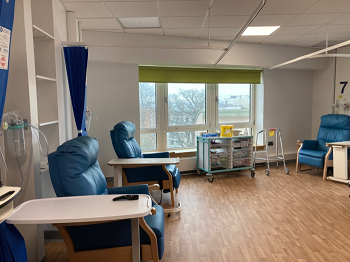
The clinic is located within RACE unit (orange zone level 3), Poole Hospital
Visiting: Please see Trust Visitors Charter here.
RACE Clinic is an Advanced Nurse Practitioner (ANP) led service with the aim of clinically assessing and diagnosing older patients without the need for an inpatient admission. It sits under the umbrella of Same Day Emergency Care (SDEC) and is situated at Poole Hospital (orange zone level 3).
Patients can be referred to RACE Clinic via GPs, intermediate care teams and the Emergency Department. The clinic significantly reduces the waiting times for older patients to be assessed and diagnosed, in a quiet, friendly and non-threatening environment.
The appointment takes longer than the usual outpatient appointment as clinical assessment, investigations and results are obtained within the same appointment slot. It can take up to 4 hours. We provide refreshments and a light lunch if you attend over this period.
The ANPs are adept at assessing a variety of complex clinical conditions. They adopt a holistic approach to caregiving; taking into consideration any other problems or issues that may impact on your presenting complaint and your wellbeing. You will also be seen by a consultant geriatrician during your stay and we have therapists if a functional or mobility assessment is required.
RACE Clinic is nationally recognised as one of the first Older Person’s SDEC in the country, and has paved the way in developing alternative pathways to inpatient admission for Older Patients.
The Neonatal Unit
The Neonatal Unit is located on the 3rd floor of the BEACH Building (B12) at the Royal Bournemouth Hospital. See map here.
The Neonatal Unit cares for babies requiring special care, whether it is due to prematurity, illness at delivery, or health problems during the baby's stay at hospital.
The unit has 20 cots; fours of those are intensive care cots, six are high dependency cots, and ten are special care cots.
If your baby has to stay in the Neonatal Unit, we will work with the immediate family and/or carers to meet his/her specific needs. The facilities at the special baby unit include two overnight rooms with en-suite showers, one side room, four on unit/isolation rooms that parents can stay in alongside their baby, a shower room, expressing room, and a family room.
The unit has open visiting for parents and siblings. Other visiting is between 2:30pm-6pm.